
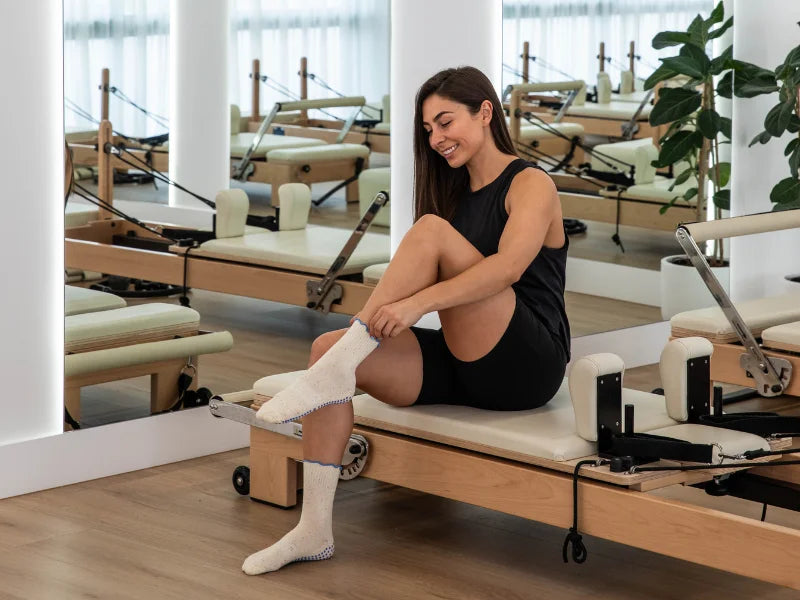
How to Wash Grip Socks So the Grip Actually Lasts
A quality pair of grip socks should hold their traction through hundreds of sessions. Most people who find theirs losing grip faster than expected are making one or two simple washing mistakes that are easy to fix once you know what they are.

The single biggest mistake: fabric softener
If you take nothing else from this, take this. Fabric softener is the fastest way to ruin grip socks, and it's the mistake most people make without realising it. Fabric softener works by leaving a thin coating on fabric fibres that makes them feel softer. On grip socks, that coating settles directly onto the silicone grip dots and creates a barrier between the dot and the surface you're training on. The grip doesn't disappear overnight, it just gradually becomes less effective with each wash until one session you notice you're sliding and you can't work out why.
The fix is simple: never use fabric softener on grip socks. A regular cold machine wash with standard detergent is all they need. The cotton and spandex blend in Cheeky Winx grip socks doesn't need softening to feel comfortable, and skipping it completely protects the grip for significantly longer.
The full wash guide
Follow these steps after every session and your grip socks will hold their traction through many more classes than a pair that's been washed carelessly.
Turn them inside out before washing. This protects the grip dots from rubbing directly against other items in the machine, which reduces friction on the silicone and helps the dots stay bonded to the fabric for longer.
Cold machine wash, gentle cycle. Cold water preserves the elasticity of the spandex in the sock and prevents any shrinkage in the cotton. A gentle cycle reduces the mechanical stress on the grip dots compared to a standard cycle. There's no need for anything hotter than cold, and hot water actively shortens the life of both the grip and the elastic.
Standard detergent only, no fabric softener, no bleach. Regular detergent cleans the sock properly without leaving any residue on the grip. Bleach weakens the fibres and the silicone over time. Fabric softener coats the grip dots as explained above. None of these are worth the tradeoff.
Air dry, never tumble dry. Heat is the other main enemy of grip socks. A tumble dryer runs hot enough to degrade the silicone dots and break down the elastane in the sock over time, which is why grip socks that go through the dryer regularly tend to lose their shape and grip much faster. Hanging them up after washing is all they need. Because the cotton and spandex blend dries quickly, they're usually ready well before your next session.

How often should you wash grip socks
After every session. Grip socks are in contact with your feet for the full duration of a class and with shared studio equipment throughout. Washing them after every use keeps them hygienic and stops sweat and bacteria from building up in the fibres, which is also what causes that persistent smell that washing alone won't fix once it sets in.
If you train multiple times a week, having two or three pairs in rotation means you always have a clean pair ready without having to wash the same pair every single day. It also means each pair goes through fewer wash cycles across the same period of time, which extends their life considerably. Browse the full Cheeky Winx grip sock range to find your next pair or stock up on multiple designs.
What to do if the grip feels less effective
If your grip socks feel less sticky than they used to, the first thing to check is whether fabric softener has been used on them at any point. If it has, a wash with white vinegar instead of detergent can sometimes strip the residue and restore some of the traction. Fill the machine as normal, substitute white vinegar for detergent, run a cold gentle cycle and air dry as usual. It won't reverse significant degradation but it can make a noticeable difference for socks that have had light softener exposure.
If the grip dots themselves are visibly peeling, flattening or missing, the socks have reached the end of their life and it's time to replace them. A grip sock that's lost its dots isn't providing meaningful traction on the reformer and it's worth treating that as a safety consideration rather than pushing through with a worn-out pair.
Storage tips that most people overlook
How you store grip socks between sessions makes more difference than people expect. Stuffing them into the corner of a gym bag while they're still warm from a session doesn't give the fabric time to recover its shape and creates a damp environment that bacteria love. After your session, hang them somewhere with airflow rather than packing them straight away. Once they're fully dry, storing them flat or rolled loosely rather than balled up keeps the grip dots from being compressed against each other, which helps them maintain their shape between wears.

Frequently asked questions
Can grip socks go in the tumble dryer?
It's best to avoid it. The heat from a dryer degrades the silicone grip dots and breaks down the elastane in the sock over time, which shortens the life of both the grip and the fit. Air drying takes a little longer but keeps them performing properly for significantly more sessions.
Why are my grip socks losing their grip after washing?
The most common cause is fabric softener. It leaves a residue on the silicone dots that reduces their traction over time. Switching to a regular detergent with no softener and doing a vinegar wash to strip any existing residue will often improve the grip noticeably.
How many pairs of grip socks should I own?
If you train two or more times a week, two to three pairs is the practical minimum. It means you always have a clean pair ready and each pair goes through fewer wash cycles over the same period, which extends the life of all of them. Browse the Cheeky Winx grip sock range across ankle, crew and frilly styles to build up your collection.
Should I wash grip socks before wearing them for the first time?
Yes. A wash before the first wear removes any factory residue from the fabric and the grip dots and gives you a cleaner starting point. Follow the same cold gentle cycle, no softener, air dry process as you would for any subsequent wash.
Can I wash grip socks with my regular laundry?
You can, but there are a couple of things worth keeping in mind. Turn them inside out first, make sure the load doesn't include anything with velcro or rough textures that could snag the grip dots, and check that your regular detergent doesn't include built-in fabric softener, which some do. As long as those conditions are met, washing them with other delicates on a cold gentle cycle is fine.
How do I know when it's time to replace my grip socks?
If the grip dots are visibly peeling, flattening or missing in patches, the socks are no longer providing reliable traction and it's time for a new pair. The same applies if the elastic has stretched out and the sock no longer fits snugly around the foot. A grip sock that doesn't fit properly or grip reliably isn't doing its job on the reformer. Find your next pair in the Cheeky Winx grip sock collection.

Grip socks that are washed correctly and cared for properly will last considerably longer than ones that aren't, which means better grip every session and fewer replacements over time. If you're ready to add another pair to the rotation or you're looking for a design worth actually wanting to wear, browse the full Cheeky Winx grip sock range and find your next favourite pair.

Leave a comment
This site is protected by hCaptcha and the hCaptcha Privacy Policy and Terms of Service apply.